Transmission Media in Computer Networks
Transmission media is the communication pathway used to transfer data from one device to another within a network. Whenever information such as text, images, audio, or video is exchanged between devices, it must travel through a medium. This medium acts as a bridge between the sender and the receiver, allowing data signals to move efficiently across a communication system. In computer networks, transmission media plays a vital role in ensuring reliable and effective data communication.
The performance of any network largely depends on the type of transmission medium being used. Factors such as data transfer speed, bandwidth, signal quality, transmission distance, security, and installation cost are directly influenced by the chosen medium. A suitable transmission medium helps minimize data loss, reduce interference, and improve overall network efficiency. Therefore, selecting the right medium is an important consideration when designing communication systems.
Transmission media can carry data in the form of electrical signals, light signals, or electromagnetic waves. Depending on the communication requirements, different technologies are used to transmit information over short or long distances. Modern communication networks, including the Internet, telephone systems, cable television networks, and wireless communication systems, rely heavily on various forms of transmission media to connect users and devices across the world.
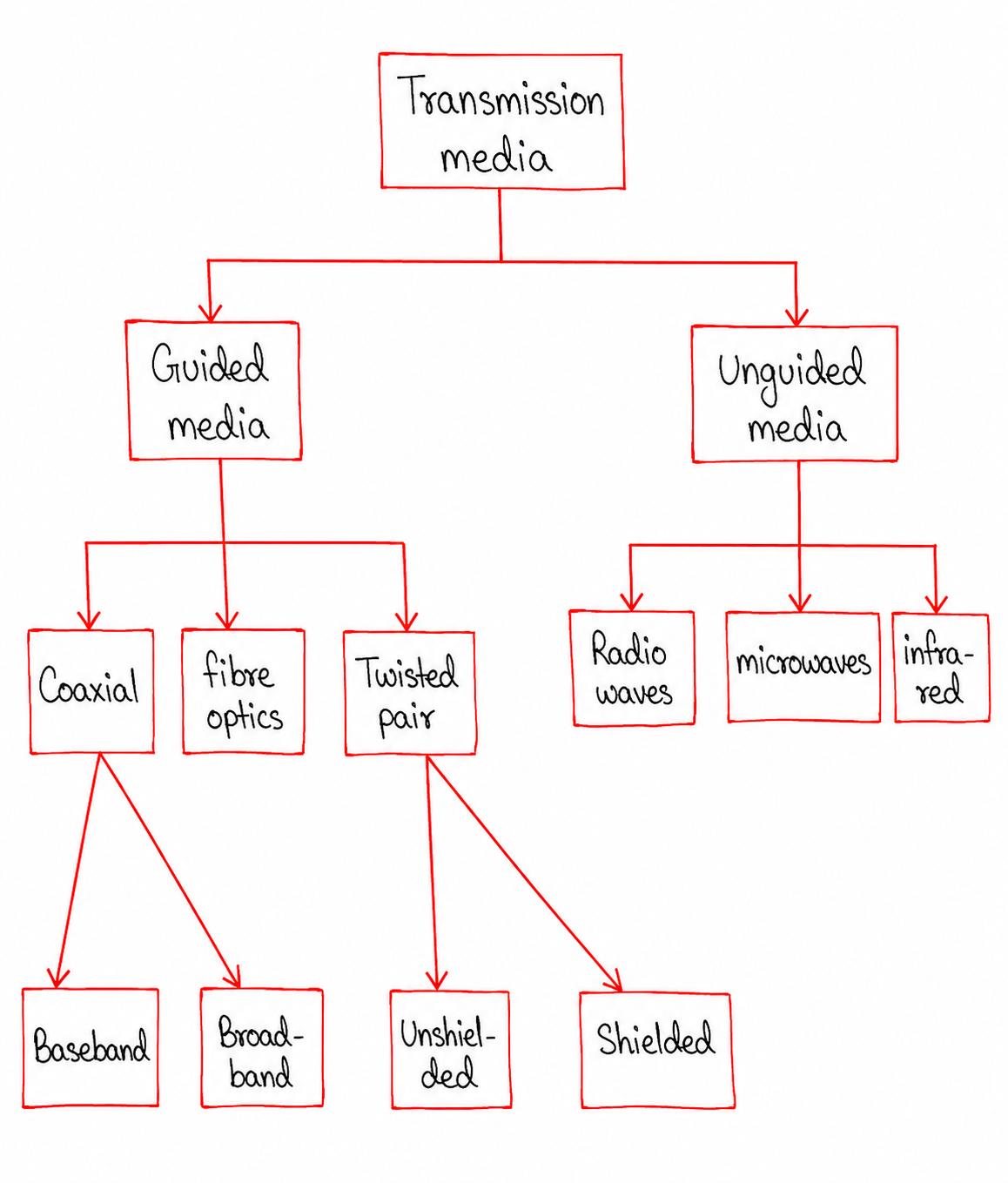
Transmission media are broadly classified into two categories:
Based on the method of data transmission, transmission media is broadly classified into two major categories: Guided Media and Unguided Media. Guided media uses physical cables such as twisted pair cables, coaxial cables, and fiber optic cables to direct signals along a specific path. Unguided media, on the other hand, transmits data through the air using electromagnetic waves and includes technologies such as radio waves, microwaves, and infrared communication.
- Guided Media (Wired Communication)
- Unguided Media (Wireless Communication)
1. Guided Media
Guided media is a type of transmission medium in which signals travel through a physical path such as cables or wires. Since the data follows a predefined route, guided media generally provides better security, lower interference, and higher reliability compared to wireless communication.
Guided media is widely used in Local Area Networks (LANs), internet infrastructure, telecommunication systems, and data centers where stable communication is required.
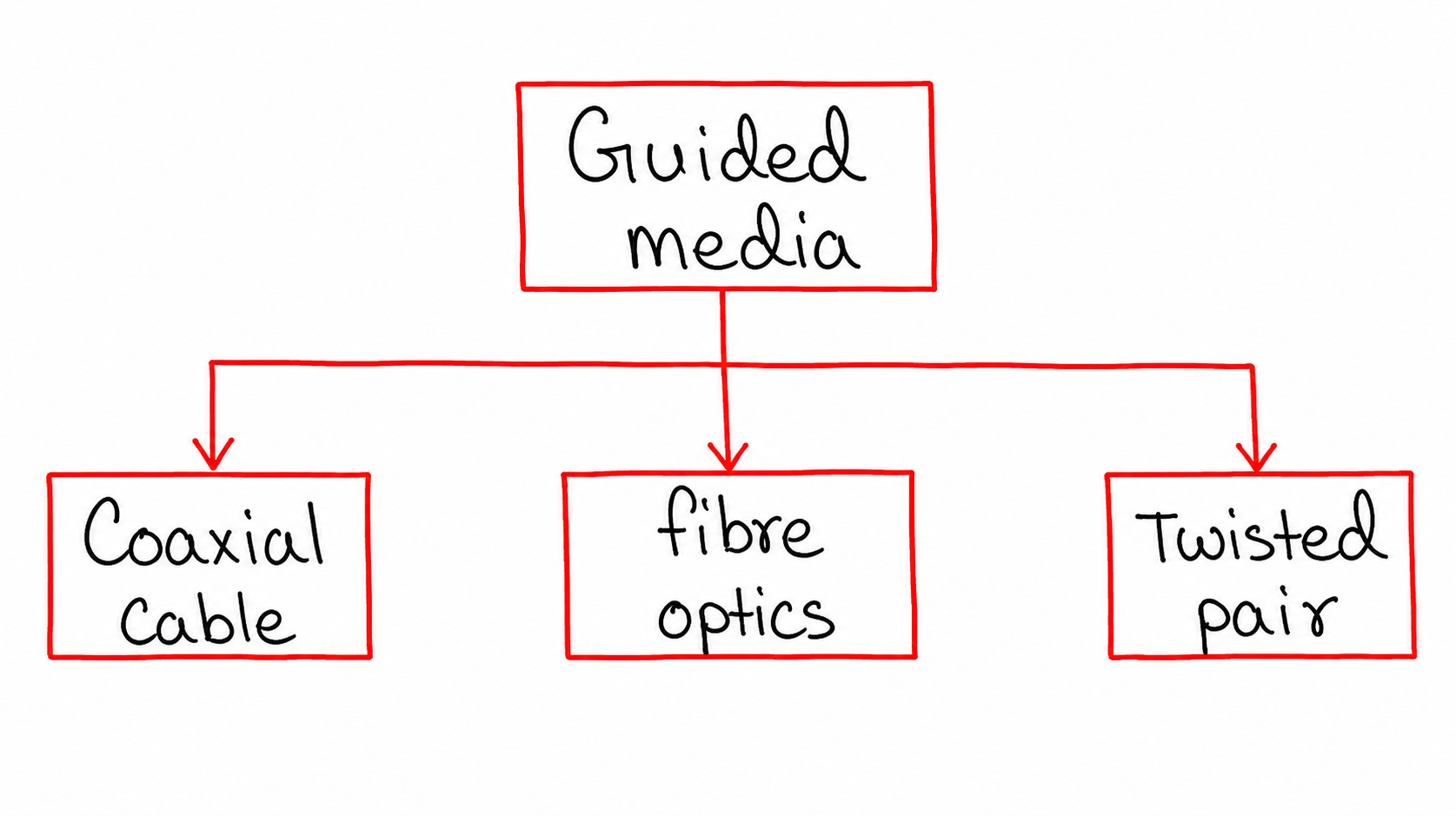
Types of Guided Media
- Twisted Pair Cable
- Coaxial Cable
- Fiber Optic Cable
1.1 Twisted Pair Cable
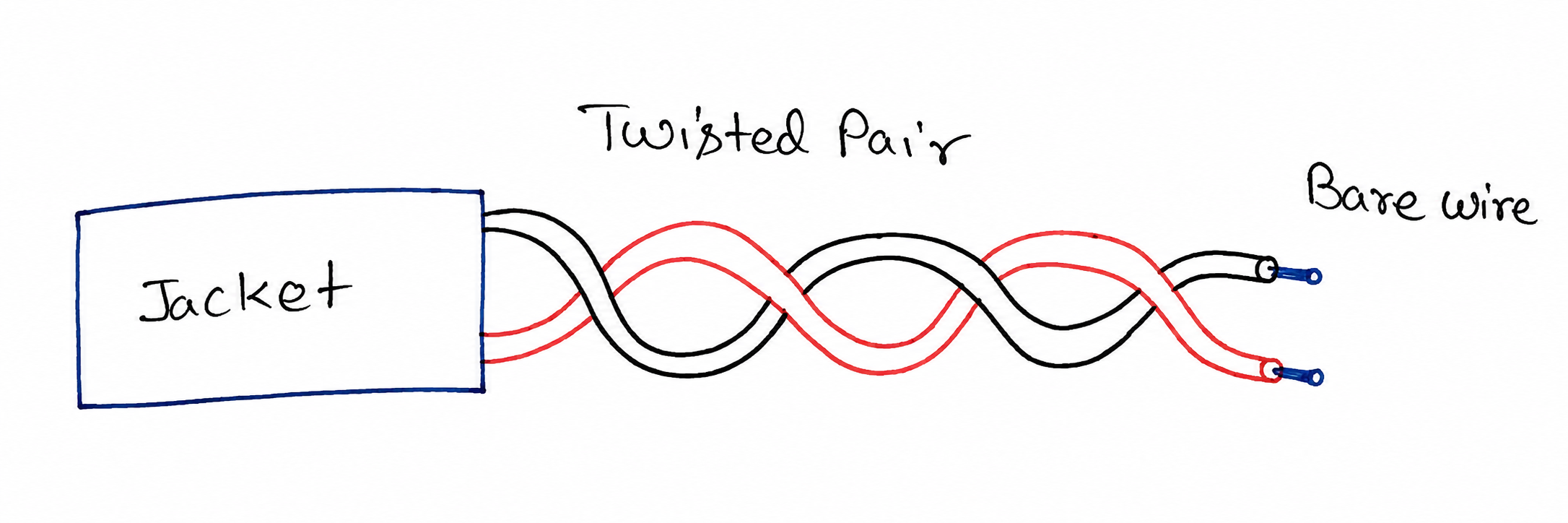
Twisted pair cable consists of two insulated copper wires twisted together. The twisting helps reduce electromagnetic interference and signal distortion during transmission. It is one of the most widely used networking cables due to its low cost and easy installation.
Types of Twisted Pair Cable
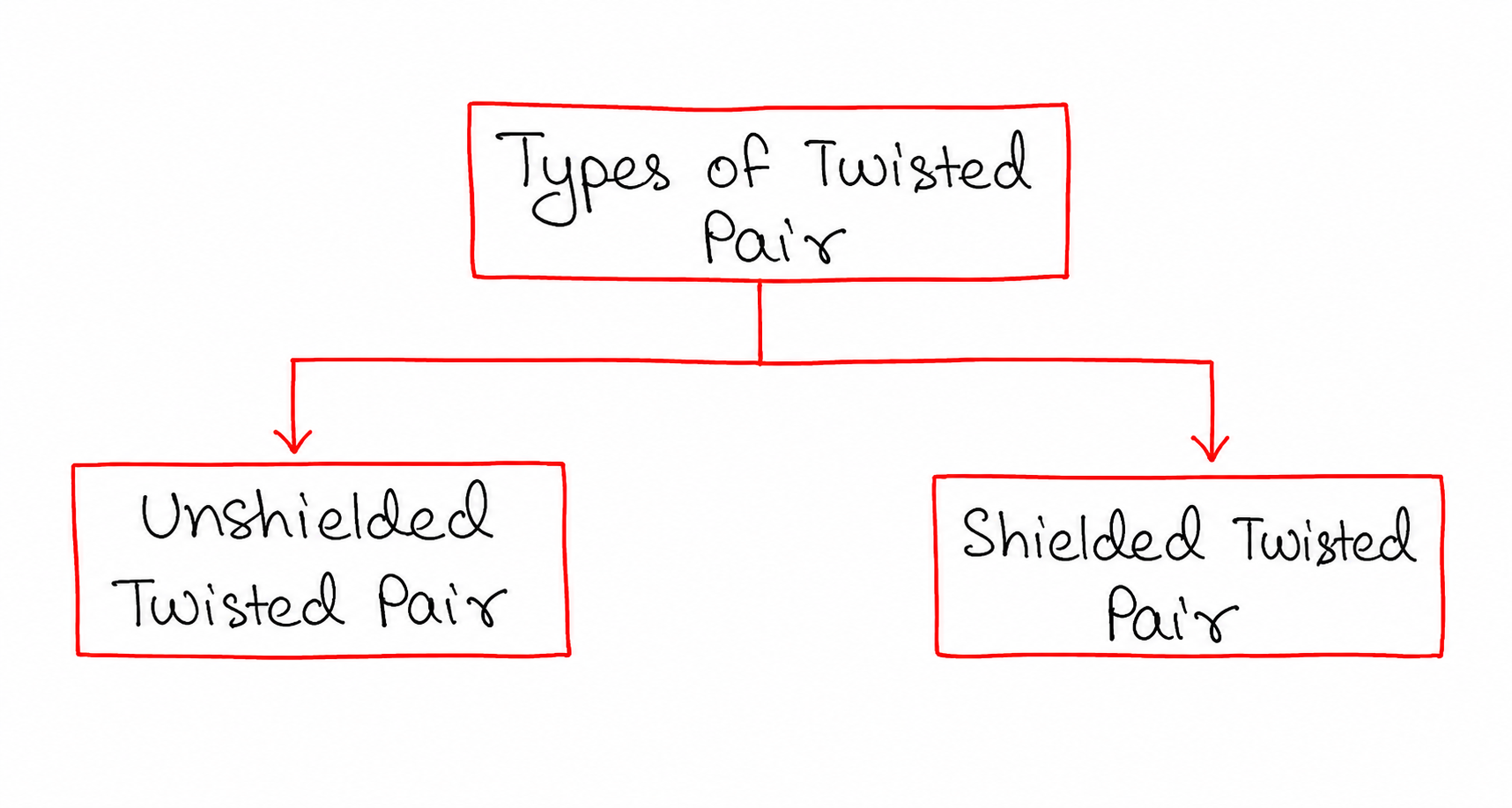
A. Unshielded Twisted Pair (UTP)
UTP cable does not contain any additional metallic shielding. It is lightweight, flexible, economical, and commonly used in Ethernet networks.
B. Shielded Twisted Pair (STP)
STP cable contains a protective metal shield that reduces external interference and improves signal quality. It is generally used in environments with high electrical noise.
Advantages of Twisted Pair Cable
- Low installation cost.
- Easy to install and maintain.
- Widely available.
- Suitable for LAN environments.
- Flexible and lightweight.
Disadvantages of Twisted Pair Cable
- Limited transmission distance.
- Lower bandwidth compared to fiber optics.
- More susceptible to interference than shielded media.
- Signal quality decreases over long distances.
1.2 Coaxial Cable
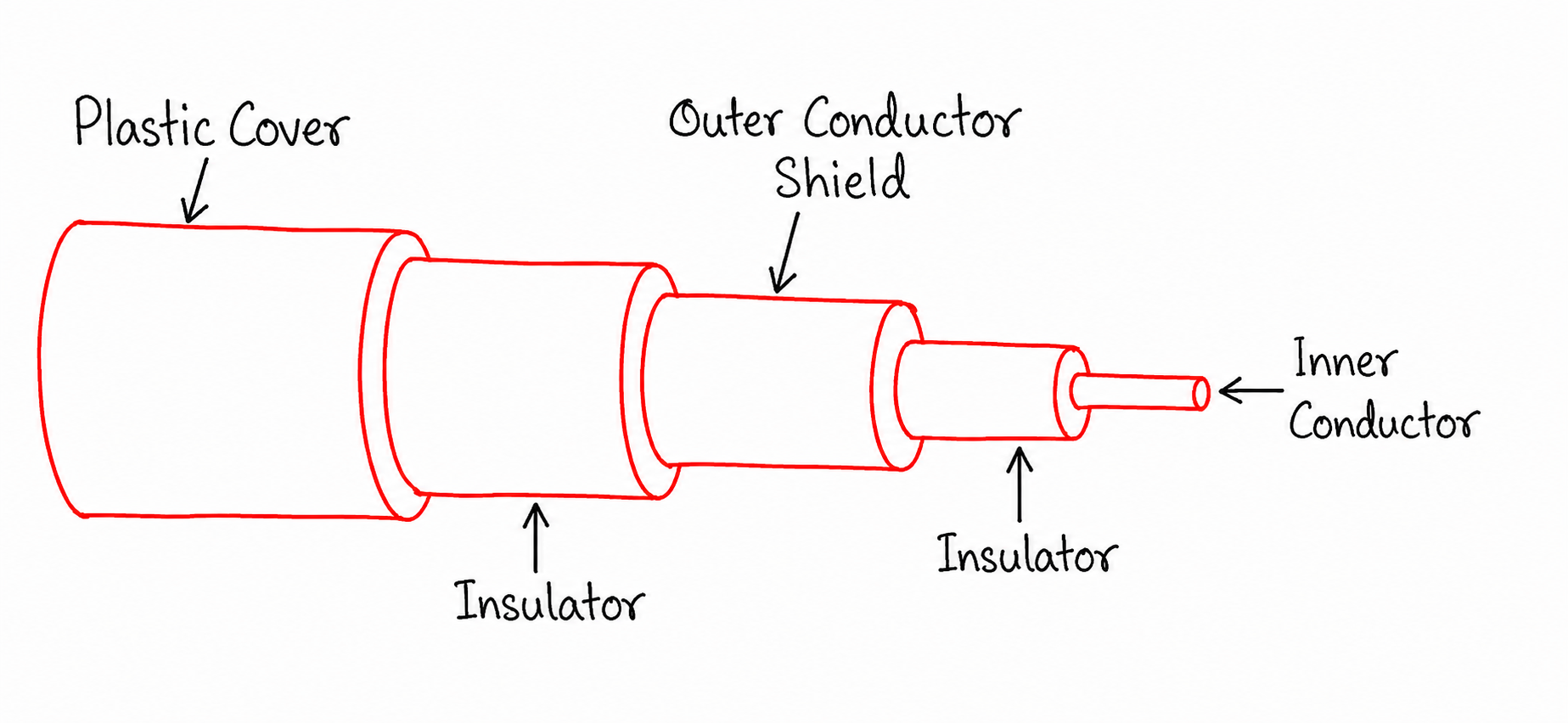
Coaxial cable consists of a central copper conductor surrounded by insulation, metallic shielding, and an outer protective jacket. The shielding protects signals from external interference, making coaxial cable more reliable than traditional twisted pair cables.
Coaxial cables are commonly used in cable television systems, broadband internet connections, and CCTV installations.
Types of Coaxial Cable
A. Baseband Coaxial Cable
Baseband coaxial cable carries digital signals and is primarily used in local area networks. The entire bandwidth is dedicated to a single communication channel.
B. Broadband Coaxial Cable
Broadband coaxial cable carries analog signals and supports multiple channels simultaneously through frequency division techniques.
Advantages of Coaxial Cable
- Better noise resistance.
- Higher bandwidth than twisted pair cable.
- Longer transmission distance.
- Reliable signal quality.
- Durable construction.
Disadvantages of Coaxial Cable
- More expensive than twisted pair cable.
- Bulkier and less flexible.
- Installation is comparatively difficult.
- Maintenance cost is higher.
1.3 Fiber Optic Cable
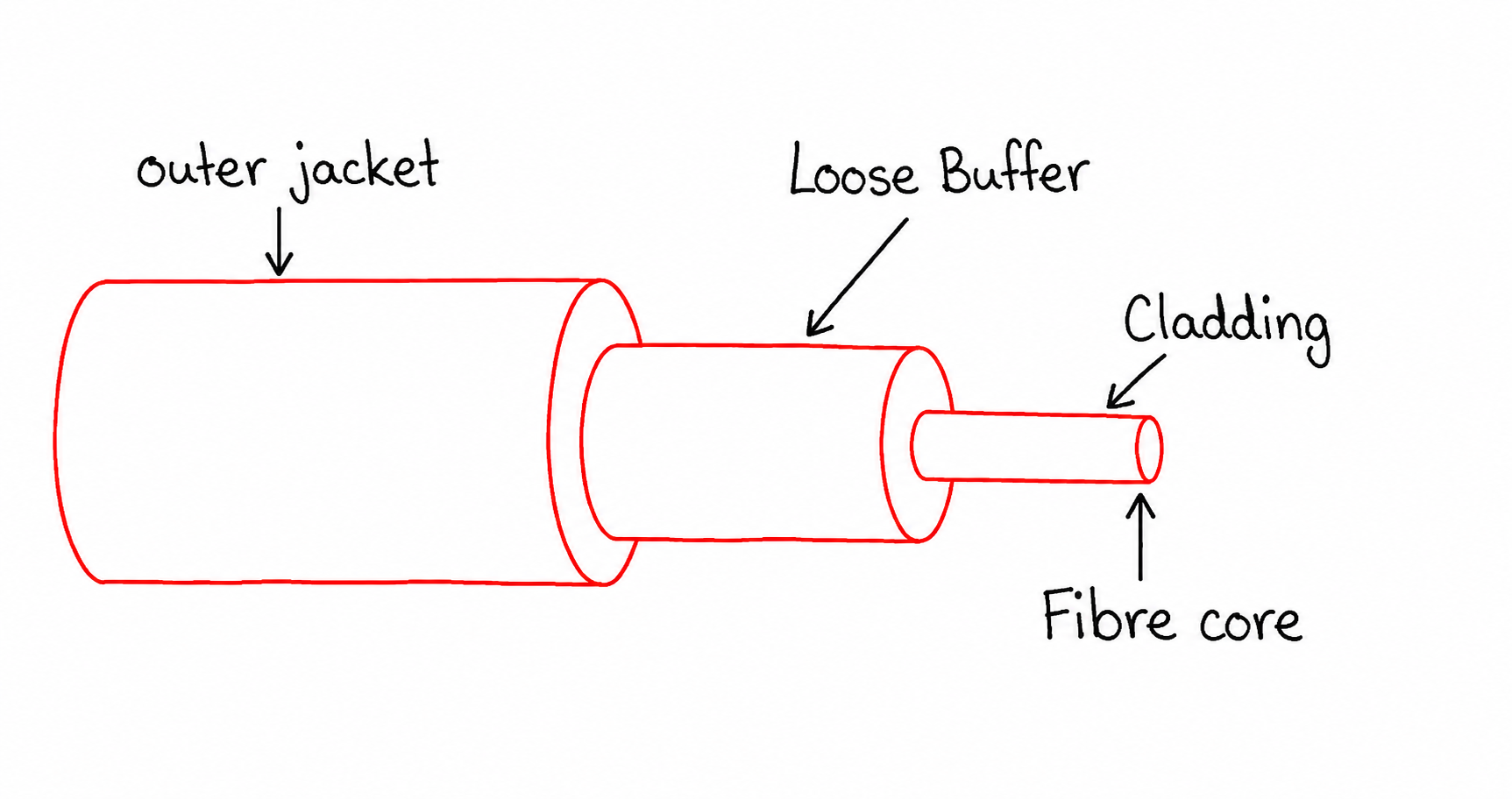
Fiber optic cable transmits data using pulses of light instead of electrical signals. It consists of extremely thin strands of glass or plastic that carry light signals over very long distances with minimal signal loss.
Fiber optics is considered the fastest and most reliable transmission medium available today. It forms the backbone of modern internet and telecommunications infrastructure.
Advantages of Fiber Optic Cable
- Extremely high data transmission speed.
- Very large bandwidth.
- Immune to electromagnetic interference.
- Highly secure communication.
- Supports long-distance transmission.
Disadvantages of Fiber Optic Cable
- High installation cost.
- Requires specialized equipment.
- Fragile compared to copper cables.
- Maintenance requires skilled professionals.
2. Unguided Media
Unguided media is a transmission medium where signals travel through free space without using any physical cable. Communication takes place using electromagnetic waves that propagate through air, vacuum, or space.
Wireless communication technologies such as Wi-Fi, mobile networks, satellite communication, and Bluetooth use unguided transmission media.
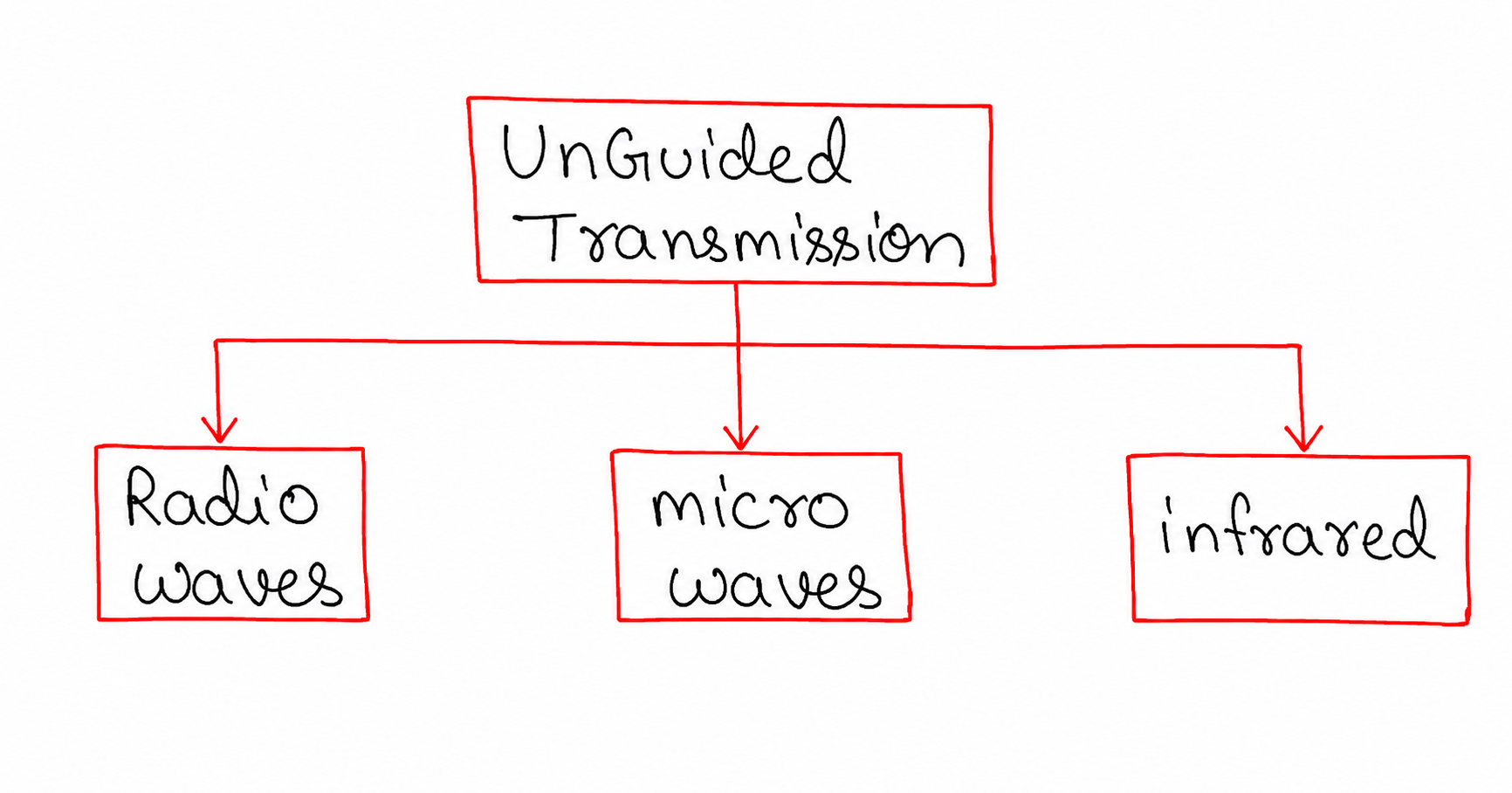
Types of Unguided Media
- Radio Waves
- Microwaves
- Infrared Waves
2.1 Radio Waves
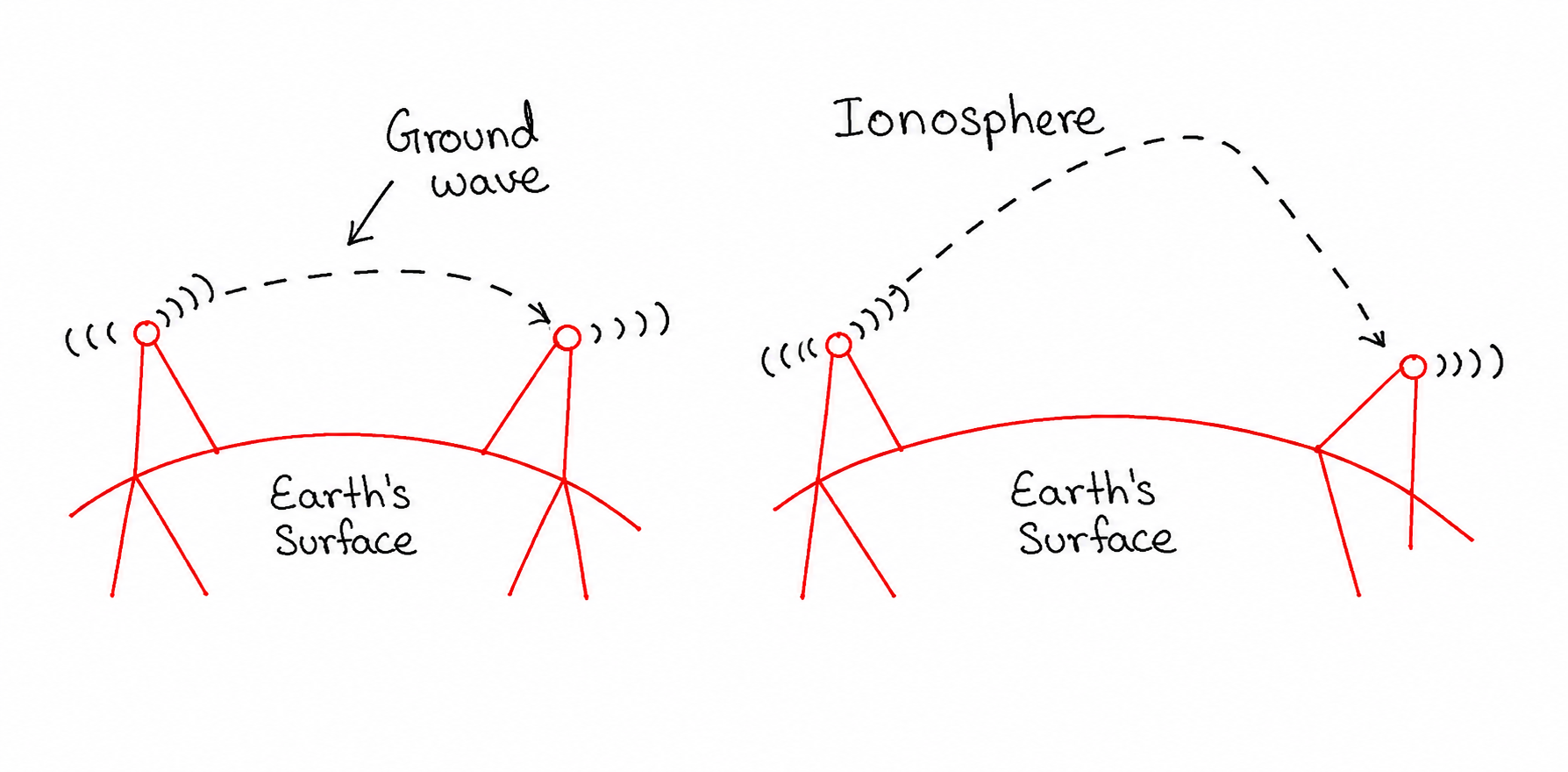
Radio waves are electromagnetic waves that can travel long distances and penetrate buildings and obstacles. They are commonly used for radio broadcasting, television broadcasting, Wi-Fi communication, and mobile networks.
Advantages
- Large coverage area.
- No physical connection required.
- Supports mobile communication.
- Cost-effective for broadcasting.
Disadvantages
- Prone to interference.
- Lower security.
- Affected by environmental conditions.
2.2 Microwaves
Microwave communication uses high-frequency electromagnetic waves that travel in straight lines. Because of this characteristic, transmitting and receiving antennas must remain aligned.
Microwaves are widely used in satellite communication, cellular networks, and long-distance point-to-point communication systems.
Advantages
- High-speed communication.
- Supports large bandwidth.
- Suitable for long-distance transmission.
Disadvantages
- Requires line-of-sight communication.
- Affected by weather conditions.
- Installation cost is relatively high.
2.3 Infrared Waves
Infrared communication uses infrared light frequencies for short-distance wireless communication. It is commonly used in remote controls, wireless peripherals, and short-range device communication.
Advantages
- Low cost.
- Simple implementation.
- Good security due to limited range.
Disadvantages
- Short communication range.
- Cannot pass through walls.
- Requires direct alignment.
Difference Between Guided and Unguided Media
Guided media and unguided media are the two primary categories of transmission media used in computer networks. While guided media transmits data through a physical path such as cables, unguided media transfers information through electromagnetic waves traveling in free space. Both types have unique characteristics, advantages, and applications depending on the communication requirements. The following table provides a detailed comparison between guided and unguided transmission media.
| Feature | Guided Media | Unguided Media |
|---|---|---|
| Transmission Path | Data travels through a dedicated physical medium such as copper cables or fiber optic cables. | Data is transmitted through air, vacuum, or free space using electromagnetic waves. |
| Physical Connection | Requires a physical connection between communicating devices. | No physical cable is required between the sender and receiver. |
| Security | Provides better security because signals remain confined within the transmission medium. | Comparatively less secure since signals can be intercepted more easily during transmission. |
| Signal Interference | Less affected by external noise and electromagnetic interference. | More vulnerable to interference from environmental and atmospheric conditions. |
| Data Transmission Speed | Generally offers higher and more stable transmission speeds, especially with fiber optics. | Speed may vary depending on distance, obstacles, and wireless technology used. |
| Installation Cost | Installation may be expensive due to cabling and infrastructure requirements. | Often requires less physical infrastructure, making deployment easier in many situations. |
| Maintenance | Maintenance can be more complex because physical cables must be inspected and repaired. | Maintenance is generally easier, but signal optimization may be required periodically. |
| Mobility | Provides limited mobility since devices remain connected through cables. | Supports high mobility, allowing users to communicate while moving. |
| Bandwidth Capacity | Usually offers higher bandwidth and reliable performance. | Bandwidth availability depends on wireless technology and frequency spectrum. |
| Reliability | More reliable due to stable physical communication channels. | Reliability may be affected by weather conditions, obstacles, and signal attenuation. |
| Coverage Area | Coverage is limited by the length and installation of cables. | Can cover short, medium, or very large geographical areas depending on the technology used. |
| Examples | Twisted Pair Cable, Coaxial Cable, Fiber Optic Cable. | Radio Waves, Microwaves, Infrared Communication, Satellite Communication. |
In summary, guided media is preferred when high security, reliability, and consistent performance are required, whereas unguided media is ideal for wireless communication and mobility. The choice between these two transmission media depends on factors such as cost, distance, speed requirements, flexibility, and the nature of the networking environment.
Conclusion
Transmission media provides the foundation for data communication in computer networks. Guided media offers secure and reliable communication through physical cables, while unguided media enables flexible wireless communication using electromagnetic waves. Understanding the characteristics, advantages, and limitations of each type helps network designers choose the most suitable medium for specific applications and communication requirements.