Software Design in Software Engineering
Once requirements have been gathered, validated, and confirmed to be feasible, a software team faces an important transition: moving from describing what the system should do to figuring out how it will actually be built. Software Design is the phase where this transformation happens, turning abstract requirements into a concrete, structured blueprint for development.
Skipping or rushing through this phase often leads to systems that technically satisfy their requirements but are difficult to maintain, extend, or debug once real-world usage begins. Good software design anticipates future changes, organizes complexity into manageable pieces, and creates a foundation that developers can build upon confidently.
In this tutorial, you will learn what software design involves, the difference between architectural and detailed design, key concepts like modularity, cohesion, and coupling, along with the core design principles that guide experienced engineers toward building maintainable, well-structured systems.
What is Software Design?
Software Design is the process of defining the architecture, components, interfaces, and internal structure of a software system based on its documented requirements. It answers the question of how a system will be built, bridging the gap between the SRS document and actual implementation.
Rather than focusing on the specific lines of code that will eventually be written, software design focuses on higher-level decisions, such as how the system should be divided into components, how those components will communicate with one another, and what overall structure will best support the system's required functionality and quality attributes.
Why Software Design Matters
- It transforms abstract requirements into a practical plan that developers can actually implement.
- It helps identify potential structural problems before a single line of code is written, when changes are far less costly.
- It establishes a system structure that supports future maintenance, updates, and feature additions.
- It improves collaboration by giving developers a shared understanding of how different parts of the system fit together.
- It directly influences the long-term quality attributes of a system, including performance, scalability, and reliability.
Levels of Software Design
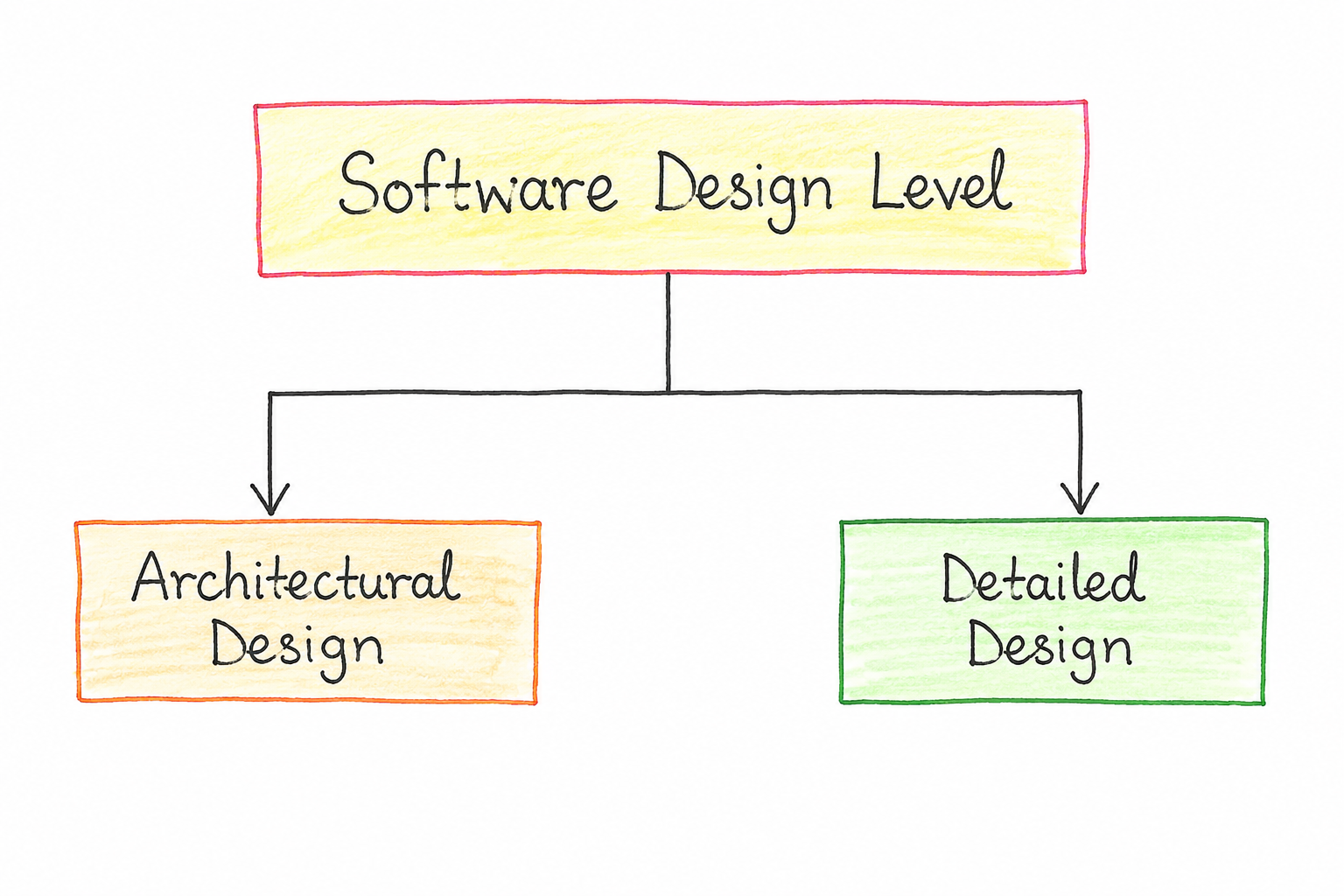
Software design is typically approached at two different levels of detail, each serving a distinct purpose within the overall design process.
| Design Level | Focus |
|---|---|
| Architectural Design | Defines the overall structure of the system, including its major components and how they interact. |
| Detailed Design | Defines the internal logic and structure of each individual component identified during architectural design. |
Architectural Design
Architectural design focuses on the big picture, identifying the major building blocks of a system and defining how they relate to and communicate with one another. This is often the first concrete design decision made after requirements have been finalized, and it significantly influences nearly every decision that follows.
For a platform similar to CS Engineering Gyan, architectural design might involve deciding how to separate the system into distinct components, such as a user management component, a video streaming component, a quiz and assessment component, and a progress tracking component, along with defining how these components will communicate, whether through direct calls, shared databases, or independent services.
Common Architectural Styles
| Architectural Style | Description |
|---|---|
| Layered Architecture | Organizes the system into layers, such as presentation, business logic, and data access, each with a distinct responsibility. |
| Client-Server Architecture | Divides the system into a client that requests services and a server that provides them. |
| Microservices Architecture | Structures the system as a collection of small, independently deployable services, each handling a specific responsibility. |
| Event-Driven Architecture | Structures the system around the production and handling of events, allowing components to react asynchronously. |
Choosing an appropriate architectural style depends heavily on a project's specific requirements, such as expected scale, performance needs, and how independently different parts of the system need to evolve over time.
Detailed Design
Once the overall architecture has been established, detailed design focuses on working out the internal structure of each individual component identified earlier. This includes decisions about specific algorithms, data structures, class structures, and the precise logic each component will use to fulfill its responsibilities.
Continuing the earlier example, detailed design for the progress tracking component of a platform like CS Engineering Gyan might involve deciding exactly how video-watching percentages are calculated and stored, how that data is updated as a student watches more content, and how it should be structured to support quick retrieval when displaying a student's dashboard.
Modularity in Software Design
Modularity refers to the practice of dividing a software system into separate, self-contained components, or modules, each responsible for a specific piece of functionality. This is one of the most fundamental principles in software design, since it directly affects how manageable and maintainable a system will be over time.
Benefits of Modularity
- Individual modules can be developed, tested, and debugged independently of one another.
- Changes to one module are less likely to unintentionally affect unrelated parts of the system.
- Modules can potentially be reused across different parts of a system, or even across different projects.
- Complex systems become easier to understand when broken down into smaller, well-defined pieces.
Cohesion in Software Design
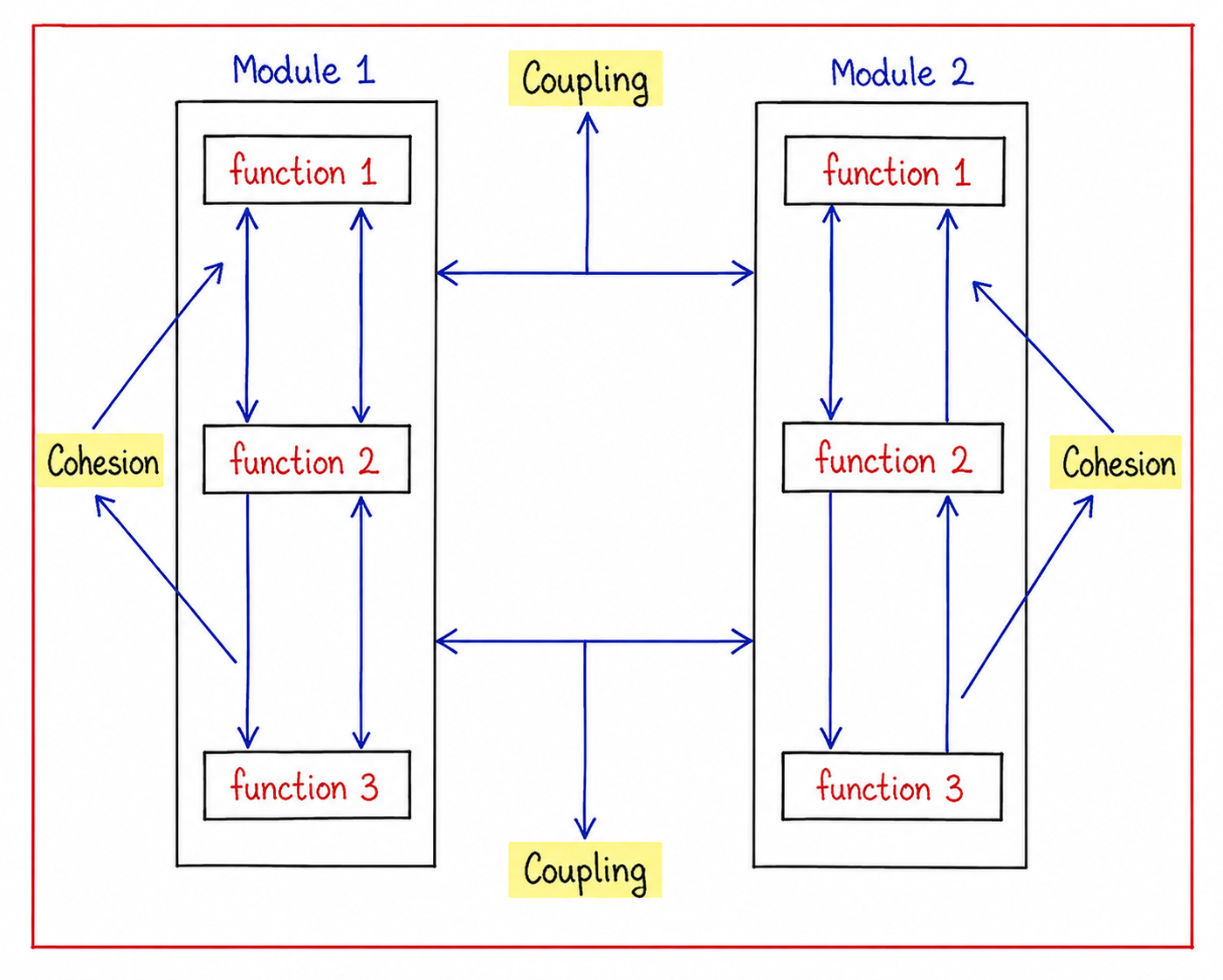
Cohesion refers to how closely related and focused the responsibilities within a single module are. A module with high cohesion performs a single, well-defined task, while a module with low cohesion attempts to handle many unrelated responsibilities at once.
Example
A module in a system like CS Engineering Gyan that is solely responsible for calculating and updating a student's course progress demonstrates high cohesion, since every part of that module relates directly to a single, focused responsibility. In contrast, a module that handles course progress calculations, sends promotional emails, and manages payment processing all within the same block of logic would demonstrate low cohesion, since these responsibilities have little logical connection to one another.
| High Cohesion | Low Cohesion |
|---|---|
| Module performs a single, focused responsibility. | Module handles multiple unrelated responsibilities. |
| Easier to understand, test, and maintain. | Harder to understand, test, and maintain due to mixed concerns. |
| Generally considered a sign of good design. | Generally considered a sign of poor design. |
Coupling in Software Design
Coupling refers to the degree of dependency between different modules within a system. Low coupling means modules are relatively independent of one another, while high coupling means modules are tightly interconnected, making changes to one module more likely to affect others.
Example
If the video streaming component of a platform like CS Engineering Gyan needs to directly access internal details of the progress tracking component's database structure to function, this represents high coupling, since a change to the progress tracking component's internal structure could unexpectedly break the video streaming component as well. A better design might have these components communicate only through a well-defined interface, reducing this tight dependency significantly.
| Low Coupling | High Coupling |
|---|---|
| Modules interact through clear, well-defined interfaces. | Modules depend heavily on each other's internal details. |
| Changes to one module rarely affect others significantly. | Changes to one module frequently require changes elsewhere. |
| Generally considered a sign of good design. | Generally considered a sign of poor design. |
Good software design generally aims for high cohesion within modules and low coupling between them, a combination that leads to systems that are easier to understand, test, and modify over time.
Key Software Design Principles
Beyond modularity, cohesion, and coupling, several broader principles guide experienced software designers toward building systems that remain manageable as they grow in size and complexity.
| Principle | Description |
|---|---|
| Abstraction | Hiding unnecessary implementation details while exposing only what other parts of the system need to know. |
| Encapsulation | Bundling data and the operations that work on it together, while restricting direct external access. |
| Separation of Concerns | Ensuring each part of the system addresses a distinct concern, rather than mixing unrelated responsibilities. |
| Design for Change | Structuring the system so future modifications can be made with minimal disruption to existing functionality. |
| Reusability | Designing components in a way that allows them to be reused in other parts of the system or future projects. |
Applying These Principles Together
In practice, these design principles work together rather than in isolation. A well-designed component for a platform like CS Engineering Gyan might use abstraction to hide the complex details of how video streaming actually works internally, encapsulate its internal state so other parts of the system cannot directly modify it improperly, maintain high cohesion by focusing solely on streaming-related responsibilities, and maintain low coupling by communicating with other components only through a clearly defined interface.
This combination of principles results in a component that is easier to test in isolation, easier to modify without unexpected side effects elsewhere in the system, and easier for new developers to understand without needing to study the entire codebase first.
Software Design Documentation
The decisions made during software design are typically documented in a Software Design Document, which serves a similar purpose to the SRS document discussed earlier, but focuses specifically on how the system will be built rather than what it must do. This documentation often includes architectural diagrams, component descriptions, interface definitions, and explanations of key design decisions.
Maintaining clear design documentation helps ensure that developers joining the project later can understand the reasoning behind existing structural decisions, rather than having to reverse-engineer them from the code alone.
Best Practices for Software Design
- Design modules with a single, clearly defined responsibility whenever possible.
- Favor communication between modules through well-defined interfaces, rather than direct access to internal details.
- Consider how the system might need to change or grow in the future, rather than designing only for current requirements.
- Document key architectural and design decisions clearly, along with the reasoning behind them.
- Review design decisions with the broader team before significant implementation effort begins.
Common Mistakes Teams Make
| Mistake | Correct Practice |
|---|---|
| Jumping straight into coding without a clear architectural plan. | Establish an architectural design before beginning detailed implementation. |
| Creating modules that handle too many unrelated responsibilities. | Aim for high cohesion by keeping each module focused on a single responsibility. |
| Allowing modules to depend heavily on each other's internal details. | Reduce coupling by communicating through clearly defined interfaces instead. |
| Designing only for current requirements without considering future changes. | Anticipate reasonable future changes and design the system to accommodate them. |
Frequently Asked Questions
-
What is software design in software engineering?
Software design is the process of defining the architecture, components, and internal structure of a system based on its requirements. -
What is the difference between architectural design and detailed design?
Architectural design focuses on the overall structure and major components of a system, while detailed design focuses on the internal logic of each individual component. -
What is modularity in software design?
Modularity refers to dividing a system into separate, self-contained components, each responsible for a specific piece of functionality. -
What is cohesion in software design?
Cohesion refers to how closely related and focused the responsibilities within a single module are. -
What is coupling in software design?
Coupling refers to the degree of dependency between different modules within a system. -
Why do good designs aim for high cohesion and low coupling?
Because this combination leads to systems that are easier to understand, test, and modify over time. -
What is an example of an architectural style?
Layered architecture, client-server architecture, and microservices architecture are common examples of architectural styles. -
Why is software design documentation important?
It helps developers understand the reasoning behind structural decisions, especially those who join the project after the initial design phase.
Summary
Software Design serves as the critical bridge between documented requirements and actual implementation, transforming abstract expectations into a structured, practical blueprint for development. Through architectural design, teams establish the overall structure of a system, while detailed design works out the internal logic of each individual component.
Core concepts like modularity, cohesion, and coupling, along with broader principles such as abstraction, encapsulation, and separation of concerns, guide designers toward building systems that remain maintainable and adaptable as they grow, whether for a small internal tool or a larger platform like CS Engineering Gyan. Investing effort into thoughtful software design significantly reduces the difficulty of future maintenance and feature development.
With a solid understanding of software design, you are now ready to explore Data Flow Diagrams, which provide a visual technique for representing how data moves through a system's various processes and components.