File Management in Operating System
File management is a core function of an operating system that deals with how data is stored, organized, accessed, and protected on storage devices. Every operating system, whether used on a computer, mobile phone, or server, relies on an efficient file management system to handle user data and system information properly.
A file can be defined as a collection of related information stored on secondary storage such as hard disks, SSDs, or external drives. These files may contain documents, images, videos, programs, or system data. The operating system acts as an interface between users and the physical storage hardware, making file handling simple and secure.
The main goal of file management is to provide a logical and user-friendly way to store data. Instead of dealing with raw disk blocks, users interact with meaningful file names, folders, and paths. This abstraction allows users to easily create, delete, rename, move, and modify files without understanding the internal working of storage devices.
File management also ensures efficient use of storage space. The operating system keeps track of free and occupied disk blocks so that storage can be utilized effectively. When files are created or deleted, the system automatically updates this information to avoid wastage and data overlap.
Another important responsibility of file management is data protection and security. The operating system controls who can read, write, or execute a file by using permissions and access rights. This prevents unauthorized users or programs from accessing sensitive information and helps maintain system stability.
File management systems also support backup and recovery operations. In case of accidental deletion, hardware failure, or system crashes, backup mechanisms help restore important data. This feature is especially important in business, educational, and government systems where data loss can have serious consequences.
Modern operating systems support advanced file management features such as hierarchical directory structures, file sharing, compression, and encryption. These features improve data organization, reduce storage usage, and enhance security, making file management more reliable and efficient.
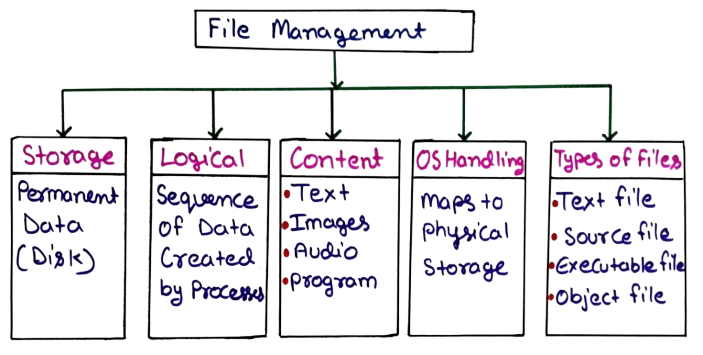
What is a File?
A file is a collection of related data stored permanently on a storage device. It may contain text, images, videos, or program instructions. Every file is identified by a unique name and is managed by the operating system using specific attributes.
Objectives of File Management
The objectives of file management define why an operating system needs a structured and well-organized method to handle files. These objectives focus on efficient storage, easy accessibility, data safety, and reliable performance. A good file management system ensures that both users and applications can work with data smoothly and securely.
-
Long-Term Data Storage:
One of the primary objectives of file management is to store data for long-term use. Files allow information to be preserved even after the system is powered off. This is essential for maintaining documents, programs, and system data over time without data loss. -
Fast and Easy Access:
File management systems are designed to provide quick and easy access to stored information. By using file names, directories, and paths, users can locate required data without searching the entire storage device, saving both time and system resources. -
Data Consistency and Reliability:
Another important objective is to maintain data consistency. The operating system ensures that data remains accurate and unchanged unless modified intentionally. Reliability is achieved by managing read and write operations properly and preventing file corruption. -
Protection and Security:
File management aims to protect files from unauthorized access. The operating system uses permissions and access control mechanisms to decide who can read, write, or execute a file. This helps in safeguarding sensitive and confidential information. -
Efficient Use of Storage Space:
Efficient utilization of storage space is another key objective. The file management system tracks free and used disk space to avoid wastage. It allocates memory dynamically and reuses available space whenever possible.
Overall, the objectives of file management focus on improving system efficiency, enhancing data security, and providing a user-friendly environment for handling files. These objectives ensure that data remains safe, accessible, and well-organized within the operating system.
Functions of File Management
File management performs several important functions that help the operating system store, organize, access, and protect data efficiently. These functions allow users and applications to work with files without dealing with the complex internal structure of storage devices.
-
File Creation:
File creation is the process of generating a new file on a storage device. When a user creates a document, image, or program, the operating system allocates storage space and assigns a unique file name and attributes.
Example: When a student creates a new file namednotes.txtto save class notes, the operating system creates the file and stores it on the disk. -
File Deletion:
File deletion removes files that are no longer required. The operating system frees the storage space occupied by the deleted file so it can be reused for new data.
Example: Deleting an old assignment file after submission helps recover disk space. -
Read and Write Operations:
Reading a file means accessing the data stored in it, while writing refers to modifying or adding new data. The operating system ensures these operations are performed safely without corrupting the file.
Example: Opening a PDF file to read its contents is a read operation, while editing a document and saving changes is a write operation. -
File Renaming:
File renaming allows users to change the name of a file for better identification and organization. This does not affect the actual data stored in the file.
Example: Renamingfile1.docxtoProject_Report.docxmakes the file easier to recognize. -
File Protection:
File protection ensures that only authorized users can access or modify files. The operating system controls access using permissions such as read, write, and execute.
Example: A system file may be set as read-only so that normal users cannot modify or delete it accidentally.
In addition to these functions, modern operating systems also support advanced file management tasks such as file sharing, backup, recovery, compression, and encryption. Together, these functions ensure data integrity, security, and efficient system performance.
File Attributes
File attributes are the descriptive properties associated with a file that provide important information to the operating system. These attributes help the system identify, organize, protect, and manage files efficiently. Without file attributes, the operating system would not be able to handle files properly or enforce security rules.
-
File Name:
The file name is a human-readable identifier assigned to a file. It allows users and applications to locate and access the file easily. File names usually consist of a main name and an extension that indicates the file type.
Example:resume.pdforprogram.cclearly identifies the content and purpose of the file. -
File Type:
File type specifies the kind of data stored in the file and determines which application can open it. The operating system uses file extensions to recognize the file type.
Example: A file with.jpgextension represents an image, while.mp3represents an audio file. -
File Size:
File size indicates the amount of storage space occupied by a file. It is usually measured in bytes, kilobytes, megabytes, or gigabytes. This attribute helps the operating system manage disk space efficiently.
Example: A text file may be 20 KB in size, while a video file can be several gigabytes. -
Creation and Modification Date:
These attributes record when a file was created and when it was last modified. They are useful for tracking file history, managing backups, and identifying the most recent version of a file.
Example: A project file created on 10 March and modified on 15 March shows active usage and updates. -
Access Permissions:
Access permissions define who can read, write, or execute a file. This attribute plays a vital role in data security and prevents unauthorized access or accidental modification.
Example: A system file may have read-only permission for normal users but full access for administrators.
In addition to these common attributes, some operating systems also maintain extra information such as file owner, file location, and hidden status. Together, file attributes provide complete control over file handling and help ensure security, organization, and efficient system operation.
Importance of File Management
File management plays a crucial role in the effective functioning of an operating system. It provides a systematic way to store, organize, access, and protect data stored on secondary storage devices. Without proper file management, handling large amounts of data would become difficult, time-consuming, and unsafe.
One of the major importance of file management is the improvement of overall system performance. By organizing files efficiently and keeping track of storage locations, the operating system can quickly locate and retrieve data when required. This reduces file access time and ensures smooth execution of applications.
File management also enhances data security. The operating system uses access permissions and protection mechanisms to control who can read, write, or modify files. This prevents unauthorized users from accessing sensitive information and protects system files from accidental deletion or modification.
Proper file management ensures better organization of information. Files are arranged using directories and subdirectories, making it easy for users to store and locate data. A well-organized file structure saves time, reduces confusion, and improves productivity for both individual users and organizations.
Another important aspect of file management is data reliability and consistency. The operating system ensures that files remain accurate and unchanged unless modified intentionally. Backup and recovery features further reduce the risk of data loss caused by hardware failures, power outages, or system crashes.
File management also helps in efficient utilization of storage space. The operating system keeps track of free and occupied disk space, preventing wastage and allowing optimal use of available storage resources. This is especially important in systems with limited storage capacity.
From a developer’s perspective, file management simplifies application design. Developers can rely on the operating system’s file handling services instead of managing storage details manually. This reduces complexity and improves software reliability.
Conclusion
File management in an operating system provides a reliable and secure way to handle stored data. By managing files, directories, permissions, and access methods, the operating system ensures efficient and safe data operations.