Data Models in DBMS
A Data Model in a Database Management System (DBMS) is a conceptual tool that defines how data is organized, stored, and related within a database. It provides a clear framework for designing databases before actual implementation.
In modern database systems, data is not stored randomly. Instead, it follows a well-defined structure so that information can be stored efficiently and retrieved quickly whenever required. A data model helps achieve this structure by describing data elements, their relationships, and the rules that govern them.
Simply put, a data model explains: what data is stored, how different data items are connected, and how users can access that data.
Data models act as a bridge between real-world requirements and the technical implementation of databases. They help database designers, developers, and administrators communicate using a common understanding of data.
Why Data Models are Important
Data models play a critical role in database design and management. Without a proper data model, databases may become inconsistent, inefficient, and difficult to maintain.
By using data models, organizations can plan their databases carefully before creating tables and storing actual data. This reduces errors and improves overall system reliability.
Key benefits of data models include:- Clear understanding of database structure
- Reduced data redundancy
- Improved data consistency and accuracy
- Better communication between developers and users
- Easier database maintenance and upgrades
Types of Data Models in DBMS
DBMS supports different types of data models, each designed to meet specific requirements of data organization and application needs.
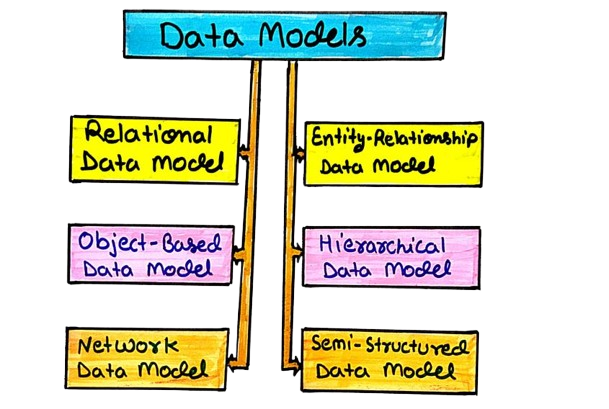
- Relational Data Model
- Entity-Relationship (ER) Data Model
- Hierarchical Data Model
- Network Data Model
- Object-Based Data Model
- Semi-Structured Data Model
1. Relational Data Model
The Relational Data Model is the most popular and widely used data model in Database Management Systems. It represents data in the form of tables (also called relations), making it simple, structured, and easy to manage.
In this model, a database is made up of multiple tables, where each table stores data about a specific entity such as students, employees, customers, or products. Every table consists of rows (also known as tuples or records) and columns (also known as attributes or fields).
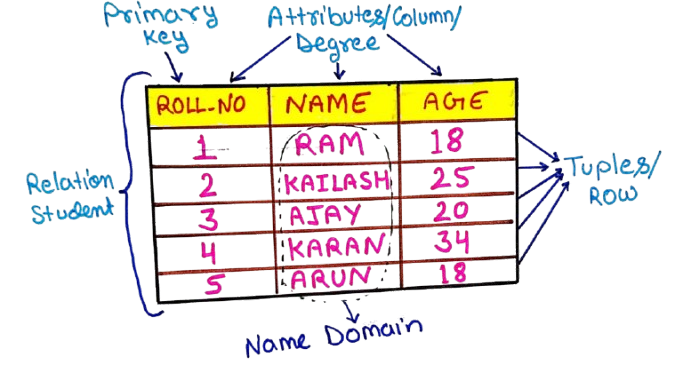
Each row in a table represents a single record, while each column represents a particular property of that record. For example, in a Student table, columns may include Roll Number, Name, Course, and Marks, while each row stores details of one student.
To uniquely identify each record in a table, the relational data model uses a Primary Key. A primary key ensures that no two records in a table are identical. To establish relationships between different tables, the model uses Foreign Keys, which refer to the primary key of another table.
For example, an Orders table may contain a Customer ID as a foreign key that links it to the Customers table. This allows data to be connected without duplication.
Main Characteristics of Relational Data Model:- Data is stored in well-structured tables
- Each table represents a real-world entity
- Primary keys uniquely identify records
- Foreign keys define relationships between tables
- Data redundancy is minimized through normalization
One of the biggest advantages of the relational data model is that it supports Structured Query Language (SQL). SQL allows users to easily insert, update, delete, and retrieve data using simple and powerful queries.
This data model also enforces data integrity through constraints such as: primary key constraints, foreign key constraints, unique constraints, and check constraints. These rules help maintain accuracy and consistency of data.
Due to its simplicity, flexibility, and strong theoretical foundation, the relational data model is used in most real-world database systems today. Popular database software based on this model includes MySQL, PostgreSQL, Oracle, and SQL Server.
Real-World Applications of Relational Data Model:
- Banking systems for managing accounts and transactions
- E-commerce websites for products, customers, and orders
- University systems for student and course management
- Hospital management systems
- Enterprise resource planning (ERP) systems
Because of its reliability, security, and ease of use, the relational data model continues to be the backbone of modern database-driven applications.
2. Entity-Relationship (ER) Data Model
The Entity-Relationship (ER) Data Model is a high-level and conceptual data model that is mainly used during the database design phase. It helps database designers visually represent real-world data requirements before implementing the database in any specific DBMS.
Instead of focusing on how data is stored physically, the ER model concentrates on what data is required and how different data items are related. Because of this, it is considered an excellent tool for understanding and communicating database structure among developers, designers, and stakeholders.
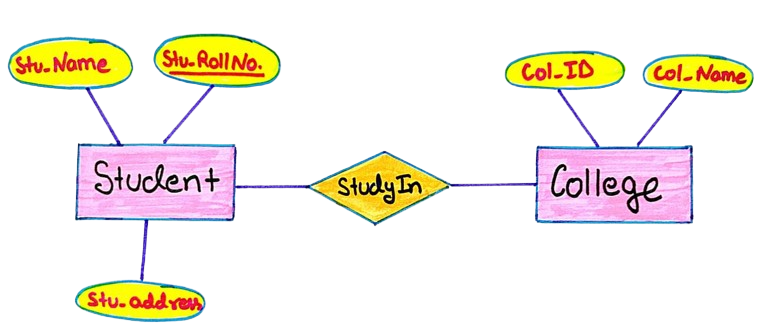
In the ER data model, real-world objects are represented as entities. Each entity has attributes that describe its properties, and relationships that show how entities are connected to each other.
For example, in a college database, Student and Course can be entities. The student's roll number, name, and age are attributes, while the relationship enrolls shows how students are associated with courses.
Main Components of ER Data Model:- Entity: Represents a real-world object such as Student, Employee, or Product
- Attribute: Describes properties of an entity like name, ID, or salary
- Relationship: Defines how two or more entities are connected
- Provides a clear and graphical representation of data
- Easy to understand even for non-technical users
- Helps identify entities, relationships, and constraints early
- Independent of any specific database software
One of the biggest advantages of the ER data model is its ability to reduce design errors by identifying problems at an early stage. Once the ER diagram is finalized, it can be easily converted into relational tables for implementation.
Due to its simplicity and clarity, the ER data model is widely used in academic learning, system analysis, and real-world database planning. It acts as a strong foundation for building reliable and well-structured databases.
3. Hierarchical Data Model
The Hierarchical Data Model is one of the earliest data models used in Database Management Systems. In this model, data is organized in a tree-like structure, where records are arranged in levels. Each record at a higher level acts as a parent, and records at the lower level act as children.
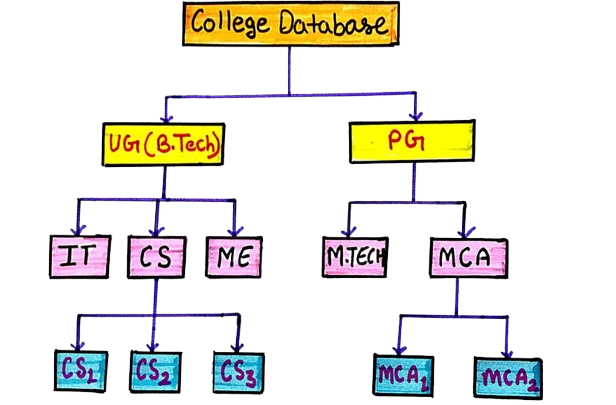
In this structure, every child record is connected to only one parent record, but a parent record can have multiple child records. This means the hierarchical data model supports one-to-many relationships very efficiently. However, it does not support many-to-many relationships naturally.
The hierarchy starts from a single root node, which represents the top-level entity. All other records are connected directly or indirectly to this root. Data access in this model follows a predefined path from the root to the required child node.
How Hierarchical Data Model Works
To access a particular record, the DBMS must traverse the tree structure from the root node down to the required level. Because of this fixed access path, data retrieval is very fast when the structure is well-defined.
For example, in an organization database, the company can be the root, departments can be child nodes, and employees can be sub-child nodes. Each employee belongs to only one department, and each department belongs to only one company.
Key Features of Hierarchical Data Model:- Data is organized in a tree-like or parent-child structure
- Supports one-to-many relationships
- Fast data retrieval due to predefined access paths
- Simple structure and easy to understand
- Less flexible for complex data relationships
Advantages of Hierarchical Data Model
- Very efficient for hierarchical relationships
- Quick data access when the hierarchy is stable
- Strong data integrity due to rigid structure
- Simple implementation for small and structured databases
Disadvantages of Hierarchical Data Model
- Does not support many-to-many relationships
- Rigid structure makes changes difficult
- Data redundancy may occur
- Complex queries are hard to implement
Due to its rigid structure and limited flexibility, the hierarchical data model is not commonly used in modern database systems. However, it is still important from an academic and historical perspective, as it laid the foundation for more advanced data models.
The hierarchical data model is mainly used in legacy systems, file systems, and applications where data naturally follows a strict hierarchical structure.
4. Network Data Model
The network data model is a more flexible and advanced form of the hierarchical data model. It was developed to overcome the limitations of the hierarchical approach, especially its inability to represent complex relationships efficiently.
In the network data model, data is organized in the form of a graph structure rather than a strict tree. A record (entity) can be connected to multiple parent records as well as multiple child records. This makes it possible to represent many-to-many relationships, which are common in real-world applications.
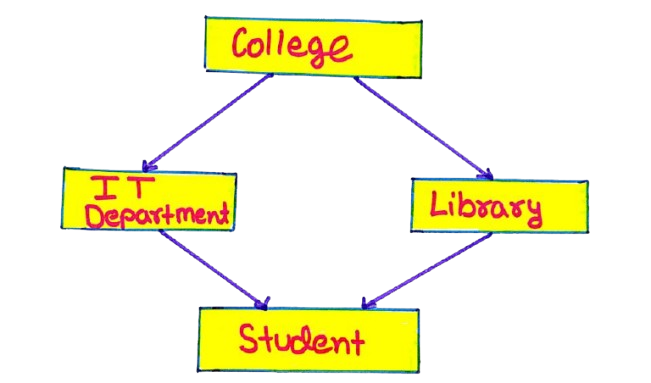
Unlike the relational model, which uses tables and keys, the network data model uses pointers or links to establish relationships between records. Each record contains links that define how it is connected to other records in the database.
For example, in an organization database, an employee may work on multiple projects, and each project may involve multiple employees. Such a relationship can be easily represented using the network data model, whereas the hierarchical model would struggle to represent this structure.
Key Features of Network Data Model:- Supports one-to-one, one-to-many, and many-to-many relationships
- Allows a record to have multiple parent records
- Uses pointers or links to connect related data
- Provides faster data access compared to hierarchical model
- More flexible than hierarchical data model
Because of its pointer-based structure, data retrieval in the network data model can be very fast once the access path is known. However, this also means that applications must be aware of the database structure, making programs tightly coupled with the data design.
One major drawback of the network data model is its complexity. Designing, implementing, and maintaining such databases requires deep technical knowledge. Any structural change in the database may require changes in application programs, which reduces data independence.
Due to these limitations, the network data model is rarely used in modern database systems. However, it played an important role in the evolution of database technology and influenced the development of later models, especially the relational data model.
The network data model was mainly used in early database systems for applications such as manufacturing systems, inventory management, and large enterprise databases where complex relationships were common.
5. Object-Based Data Model
The object-based data model is a modern approach to database design in which data is represented in the form of objects. This model is inspired by the concepts of object-oriented programming (OOP), where real-world entities are modeled as objects. Each object is a combination of both data (attributes) and functions (methods) that operate on that data.
In traditional database models, data and behavior are stored separately, but in the object-based model, both are combined together into a single unit called an object. This makes the system more organized, flexible, and closer to real-world representation.
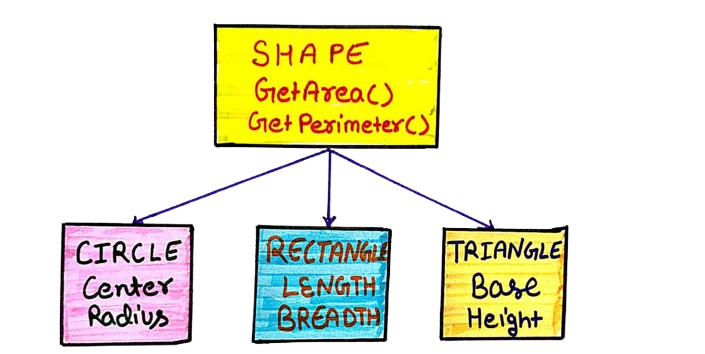
In this model, every object represents a real-world entity such as a student, employee, product, or vehicle. For example, a Student object may contain attributes like roll number, name, and age, along with methods like calculateGrade() or displayDetails().
The object-based data model is widely used in systems where data is complex and highly interconnected. It allows developers to design databases that behave more naturally and efficiently when handling real-life scenarios.
Working of Object-Based Data Model
In this model, objects are stored in the database along with their relationships. Each object has a unique identity and can interact with other objects. These interactions help in performing different operations on the stored data.
Object-based databases use the concept of classes and objects similar to programming languages like Java or C++. A class acts as a blueprint, and objects are instances of that class.
Key Features of Object-Based Data Model
- Encapsulation: Data and methods are combined into a single unit called an object, improving security and structure.
- Support for Complex Data: It can handle complex data types such as images, audio, video, and multimedia files easily.
- Reusability: Objects and classes can be reused in different parts of an application, reducing development time.
- Inheritance: New objects can inherit properties and behavior from existing objects, improving code efficiency.
- Flexibility: The model can easily adapt to changing requirements in real-world applications.
Advantages of Object-Based Data Model
- Provides a better representation of real-world entities
- Reduces complexity in database design
- Improves data integrity and security
- Efficient handling of large and complex data structures
- Supports advanced applications like CAD, AI, and multimedia systems
Disadvantages of Object-Based Data Model
- More complex to design and implement compared to relational models
- Requires advanced knowledge of object-oriented concepts
- Not supported by all traditional database systems
Applications of Object-Based Data Model
The object-based data model is commonly used in advanced computing areas where traditional models are not sufficient. Some important applications include:
- Multimedia systems (audio, video, and image processing)
- Computer-Aided Design (CAD) and Computer-Aided Manufacturing (CAM)
- Artificial Intelligence (AI) systems
- Engineering simulation applications
- Object-oriented database management systems
The object-based data model is a powerful and modern database approach that combines the benefits of object-oriented programming and database systems. It provides a more natural way to represent complex data and is highly suitable for advanced applications. Although it is more complex than traditional models, its flexibility and efficiency make it an important part of modern database technologies.
6. Semi-Structured Data Model
The semi-structured data model is a flexible database model in which data does not follow a strict or fixed schema. Unlike traditional models such as relational or hierarchical models, semi-structured data allows each record to have a different structure. This makes it highly suitable for modern applications where data formats frequently change.
In this model, data is partially organized but not fully rigid. It lies between structured and unstructured data. The most common formats used in this model are XML (eXtensible Markup Language) and JSON (JavaScript Object Notation), which allow data to be stored in a hierarchical and self-describing format.
In semi-structured data, each data item can have its own structure. This means that different records in the same collection may contain different attributes. For example, one product in an online store may have name, price, and brand, while another product may also include ratings, reviews, and discount information.
This model is widely used in modern web applications, cloud computing systems, and big data environments because it allows data to be stored and processed without strict schema restrictions.
Structure of Semi-Structured Data Model
The structure of this model is flexible and often represented in a tree-like or graph-like format. Data is stored using tags, key-value pairs, or nested elements. Each element may contain sub-elements, making it easy to represent complex and hierarchical information.
Unlike relational databases, there is no requirement for predefined tables or fixed columns. This allows easy integration of data from multiple sources with different formats.
Key Features of Semi-Structured Data Model
- Flexible Schema: Data does not require a fixed structure or predefined schema.
- Self-Describing Data: Data contains metadata within itself using tags or key-value pairs.
- Dynamic Structure: New fields can be added without changing existing data structure.
- Hierarchical Representation: Supports nested data formats like JSON and XML.
- Easy Integration: Can easily combine data from different sources and formats.
Advantages of Semi-Structured Data Model
- Highly flexible and adaptable to changing requirements
- Ideal for modern web and cloud-based applications
- Supports complex and nested data structures
- Easy to exchange data between different systems
- Efficient for big data and real-time processing
Disadvantages of Semi-Structured Data Model
- Lack of strict structure can lead to data inconsistency
- Difficult to enforce rules like constraints and relationships
- Query processing can be slower compared to structured models
- Complex data management in large systems
Applications of Semi-Structured Data Model
The semi-structured data model is widely used in modern computing systems where flexibility is more important than strict structure. It is especially useful in environments where data is constantly changing or coming from multiple sources.
- Web applications and dynamic websites
- REST APIs and web services
- NoSQL databases like MongoDB and CouchDB
- Cloud computing platforms
- Big data analytics systems
- Social media platforms and content management systems
The semi-structured data model is an important part of modern database systems that provides flexibility and adaptability in data storage. It bridges the gap between structured and unstructured data models and is widely used in web technologies, cloud systems, and big data applications. Due to its dynamic nature, it has become a key technology in handling complex and evolving data requirements in the digital world.
Advantages of Data Models
A data model plays a very important role in the design and development of database systems. It provides a structured way to organize, store, and manage data efficiently. By defining how data is related, stored, and accessed, data models help developers build reliable and scalable database systems.
Using a proper data model improves the overall quality of a database system by ensuring consistency, reducing redundancy, and making data easier to understand and manage. It acts as a blueprint for designing databases in a systematic manner.
Below are the major advantages of data models in database management systems:
1. Provides Clear Structure for Database Design
Data models offer a clear and well-defined structure for organizing data. They help database designers understand how different data elements are connected and how they should be stored. This structured approach reduces confusion during database development and ensures a systematic design process.
2. Improves Data Consistency and Integrity
One of the most important benefits of data models is maintaining data consistency and integrity. Rules and constraints defined in the model ensure that only valid and accurate data is stored in the database. This helps in avoiding errors, duplication, and inconsistencies across the system.
3. Helps in Understanding Data Relationships
Data models clearly define relationships between different data entities. Whether it is one-to-one, one-to-many, or many-to-many relationships, the model helps visualize how data items are connected. This makes it easier for developers and users to understand the overall database structure.
4. Supports Efficient Database Development
With the help of data models, developers can design databases more efficiently. It provides a blueprint that guides the entire development process, reducing development time and effort. It also helps in identifying potential design issues early in the system lifecycle.
5. Makes Database Maintenance Easier
Data models simplify the process of maintaining and updating databases. Since the structure is already well-defined, making changes or adding new features becomes easier and more controlled. This reduces the chances of system errors during updates or modifications.
6. Reduces Data Redundancy
A well-designed data model helps minimize data duplication by organizing information properly. This not only saves storage space but also improves overall system performance and consistency.
7. Enhances Communication Between Teams
Data models act as a common language between developers, designers, and stakeholders. They provide a visual representation of the database, making it easier for non-technical users to understand system design and requirements.
8. Improves Data Security
By clearly defining data structures and access rules, data models contribute to better data security. They help control how data is accessed and modified, reducing the risk of unauthorized changes or data loss.
Exam-Oriented Short Definition
A data model is a set of concepts used to describe the structure, relationships, and constraints of data in a database system.